
Undergraduate Certificate in Automating Database Security with Python
Earn an Undergraduate Certificate in automating database security with Python, enhancing skills in cybersecurity and Python scripting for secure database management.
Undergraduate Certificate in Automating Database Security with Python
Programme Overview
The Undergraduate Certificate in Automating Database Security with Python is designed for students and professionals seeking to enhance their cybersecurity skills while specializing in database security automation. This program focuses on the practical application of Python for securing, managing, and automating database operations, ensuring data integrity, and mitigating security risks. It is ideal for those with a foundational knowledge of Python and an interest in cybersecurity, such as software developers, IT professionals, and cybersecurity enthusiasts looking to advance their career in database security.
Throughout the program, learners will develop a comprehensive understanding of Python scripting, database management systems, and security protocols. Key skills include automating security audits, implementing encryption and decryption techniques, configuring security policies, and responding to security breaches. Students will also learn to use Python libraries and tools for database management and security, enhancing their ability to protect sensitive data and maintain compliance with security standards.
This certificate is expected to have a significant career impact, preparing graduates for roles such as Database Security Analyst, Cybersecurity Engineer, or Security Consultant. By acquiring expertise in automating database security with Python, learners are well-equipped to contribute to the development of robust security solutions, safeguarding against cyber threats and ensuring the integrity of critical data.
What You'll Learn
Embark on a journey to master the art of automating database security with the 'Undergraduate Certificate in Automating Database Security with Python.' This intensive program equips you with the skills to safeguard critical data in modern computing environments. You will delve into the intricacies of Python programming, learning to write efficient scripts that enhance database security. Key topics include secure database design, vulnerability analysis, and incident response, all tailored to prepare you for real-world challenges.
Through hands-on projects and practical exercises, you will apply your knowledge to automate security tasks, from data encryption and access control to log analysis and threat detection. This program is designed to help you understand the latest security protocols and best practices, enabling you to develop robust security solutions that protect sensitive information.
Graduates of this program are well-positioned for careers as database security analysts, security engineers, and cybersecurity specialists. They can work in diverse sectors, from financial institutions and healthcare providers to e-commerce and technology firms, ensuring that their organizations’ databases remain secure against cyber threats. With this certificate, you will not only enhance your technical skills but also gain the confidence to address complex security issues in today’s digital landscape.
Programme Highlights
Industry-Aligned Curriculum
Developed with industry leaders for job-ready skills valued by employers worldwide.
Globally Recognised Certificate
Recognised by employers across 180+ countries as a mark of professional excellence.
Flexible Online Learning
Study at your own pace with lifetime access to all course materials and updates.
Instant Access
Start learning immediately — no application process or waiting period required.
Constantly Updated Content
Stay ahead with the latest industry trends, best practices, and emerging insights.
Career Advancement
87% of graduates report measurable career progression within 6 months of completion.
Topics Covered
- 1. Introduction to Database Security: Learners will study the importance of database security, common threats, and foundational concepts such as access control, encryption, and audit trails. They will gain an understanding of how to identify and mitigate basic security risks.
- 2. Python for Database Interaction: Learners will learn to use Python for database interaction, including connecting to databases, executing queries, and handling results. Practical skills include writing secure SQL queries and using Python libraries like sqlite3 and psycopg2.
- 3. Database Encryption Techniques: This module covers various encryption techniques for securing data at rest and in transit. Learners will study symmetric and asymmetric encryption, hashing algorithms, and how to implement these techniques in Python.
- 4. Access Control and Authentication: Learners will explore methods for implementing access control and authentication mechanisms in databases. They will learn about role-based access control (RBAC), federated authentication, and how to configure these settings using Python.
- 5. Database Auditing and Monitoring: This module focuses on database auditing and monitoring techniques. Learners will study how to track and analyze database activity, set up logging, and use Python to automate the process of monitoring and reporting on database security incidents.
- 6. Web Application Security for Databases: Learners will learn about common web application security threats targeting databases and how to implement secure coding practices to prevent them. Topics include SQL injection, cross-site scripting (XSS), and secure web forms.
- 7. Advanced Encryption and Key Management: This module delves into advanced encryption methods and key management techniques, including certificate management, key exchange protocols, and secure key storage. Learners will implement these concepts using Python and industry-standard libraries.
- 8. Incident Response and Recovery: Learners will study strategies for responding to database security incidents and recovering from them. They will learn about incident response plans, backup and recovery procedures, and how to use Python to automate these processes.
- 9. Compliance and Legal Considerations: This module covers compliance requirements and legal considerations for database security, including GDPR, HIPAA, and other relevant regulations. Learners will learn how to ensure database security practices comply with these standards using Python.
- 10. Capstone Project: Learners will complete a capstone project where they apply the skills and knowledge gained throughout the programme to design and implement a secure database solution using Python. This project will require integrating multiple security measures and demonstrating the ability to automate security processes.
What You Get When You Enroll
Secure checkout • Instant access • Certificate included
Key Facts
For professionals seeking automation skills
No prior programming experience needed
Automate security tasks effectively
Apply Python to database protection
Gain hands-on project experience
Prepare for cybersecurity roles
Ready to get started?
Join thousands of professionals who already took the next step. Enroll now and get instant access.
Enroll Now — $99Why This Course
Enhance Career Opportunities: Gaining a Certificate in Automating Database Security with Python equips professionals with specialized skills in automating security protocols for databases. This certification can open doors to roles such as Database Security Analyst, Security Engineer, or DevSecOps Specialist, where knowledge of Python and security automation is highly valued.
Boost Security Expertise: The course delves into the intricacies of database security, teaching you how to implement Python scripts for secure database management. This not only improves your ability to protect sensitive data but also enhances your problem-solving skills, making you a valuable asset in organizations where data security is paramount.
Develop Practical Skills: Through hands-on projects and real-world case studies, professionals will gain practical experience in automating security tasks. This includes writing Python scripts for security audits, configuring security settings, and implementing automated security patches. These skills are directly transferable to the workplace, making you more efficient and proactive in maintaining database security.
Your Path to Certification
Trusted by Professionals Worldwide
Course Brochure
Download our comprehensive course brochure with all details
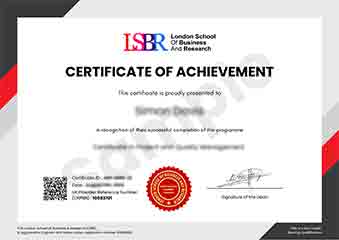
Sample Certificate
Preview the certificate you'll receive upon successful completion of this program.
Get Free Course Info
Enter your details and we'll send you a comprehensive course information pack straight to your inbox.
Employer Sponsored Training
Let your employer invest in your professional development. Request a corporate invoice and get your training funded.
Request Corporate InvoiceWhat People Say About Us
Hear from our students about their experience with the Undergraduate Certificate in Automating Database Security with Python at LSBRX - Executive Education.
Sophie Brown
United Kingdom"The course content was comprehensive and well-structured, providing a solid foundation in automating database security with Python. I gained practical skills that are directly applicable to real-world scenarios, enhancing my ability to secure databases efficiently."
Ryan MacLeod
Canada"This course has been instrumental in enhancing my ability to automate database security tasks using Python, which is highly relevant in today's tech industry. It not only provided me with practical skills but also opened up new career opportunities in cybersecurity and automation roles."
Muhammad Hassan
Malaysia"The course structure is well-organized, providing a clear path from basic concepts to advanced techniques in automating database security with Python, which has significantly enhanced my understanding and practical skills in this field. The comprehensive content and real-world applications have not only deepened my knowledge but also prepared me for professional challenges in database security."