
Executive Development Programme in Optimizing Molecular Interactions Through Electrostatics
This programme enhances leadership skills in optimizing molecular interactions through electrostatics, driving innovation and efficiency in drug development.
Executive Development Programme in Optimizing Molecular Interactions Through Electrostatics
Programme Overview
The Executive Development Programme in Optimizing Molecular Interactions Through Electrostatics is designed for seasoned professionals and emerging leaders in the pharmaceutical, biotechnology, and chemical industries who seek to advance their expertise in molecular electrostatics and its applications. Participants will explore the intricate relationships between molecular structures and electrostatic forces, gaining insights into how these interactions influence the design and efficacy of drugs and materials. The programme is structured to cater to the needs of individuals involved in drug discovery, materials science, and related research, providing them with a comprehensive understanding of the role of electrostatics in optimizing molecular interactions.
Core to the programme are key skills and knowledge in computational electrostatics, including molecular dynamics simulations, quantum chemistry, and bioinformatics. Learners will develop proficiency in using advanced software tools for predicting and analyzing electrostatic interactions, as well as in interpreting complex data sets to inform research and development strategies. The programme also emphasizes practical applications, such as designing more effective drug delivery systems and creating novel materials with enhanced properties.
The programme has a significant impact on career progression, equipping participants with the knowledge and skills to lead interdisciplinary teams and drive innovation in their organizations. Graduates will be better positioned to address complex challenges in their fields, contribute to groundbreaking discoveries, and enhance their leadership capabilities, thereby driving business success and contributing to the advancement of their industries.
What You'll Learn
The Executive Development Programme in Optimizing Molecular Interactions Through Electrostatics is designed for professionals seeking to advance in the field of molecular biology and drug discovery. This program equips participants with advanced knowledge and practical skills in understanding and manipulating electrostatic interactions at the molecular level, crucial for developing effective drugs and therapies.
Key topics include the theoretical foundations of electrostatics, computational modeling techniques, experimental methods for analyzing molecular interactions, and case studies of successful applications in pharmaceuticals. Participants learn to design molecules with specific electrostatic properties, predict their behavior, and optimize their interactions with target proteins.
Graduates apply these skills in various settings, from academia to industry, where they can contribute to the development of novel drugs, enhance existing treatments, and drive innovation in healthcare. The program’s emphasis on interdisciplinary collaboration prepares executives to lead teams and projects that bridge the gap between basic research and commercial applications.
Career opportunities abound for program graduates, including positions in pharmaceutical companies, research institutions, and biotechnology firms. They may also take on roles in patent law, regulatory affairs, and policy-making, leveraging their expertise to shape the future of molecular science and healthcare.
Programme Highlights
Industry-Aligned Curriculum
Developed with industry leaders for job-ready skills valued by employers worldwide.
Globally Recognised Certificate
Recognised by employers across 180+ countries as a mark of professional excellence.
Flexible Online Learning
Study at your own pace with lifetime access to all course materials and updates.
Instant Access
Start learning immediately — no application process or waiting period required.
Constantly Updated Content
Stay ahead with the latest industry trends, best practices, and emerging insights.
Career Advancement
87% of graduates report measurable career progression within 6 months of completion.
Topics Covered
- 1. Fundamentals of Electrostatics in Molecular Interactions: Learners will study the basic principles of electrostatic forces in molecular systems, gaining an understanding of Coulomb's law and dielectric effects. They will gain skills in using computational tools to model simple molecular interactions.
- 2. Protein-Ligand Electrostatic Interactions: This module explores the role of electrostatics in protein-ligand binding, covering ionizable groups and their behavior in aqueous environments. Learners will develop skills in predicting binding affinity and exploring conformational changes using molecular dynamics simulations.
- 3. Electrostatic Contribution to Enzyme Catalysis: Learners will delve into the electrostatic contributions to enzyme catalysis, specifically focusing on the role of charge distribution and catalytic site environments. Practical skills include the use of bioinformatics tools to analyze and predict catalytic mechanisms.
- 4. Electrostatics in Drug Design: This module covers the application of electrostatic principles in drug design, including ligand optimization and receptor-targeted strategies. Learners will gain experience in designing and evaluating small molecules using quantum mechanics and molecular mechanics methods.
- 5. Advanced Computational Methods for Electrostatics: Focusing on advanced computational techniques, learners will study methods such as Poisson-Boltzmann solvation models and Monte Carlo simulations. Practical skills include implementing these methods in software and interpreting their results in the context of molecular interactions.
- 6. Electrostatics in Nanomaterials and Biointerfaces: This module examines the role of electrostatics in nanomaterials and biointerfaces, including surface properties and biomolecular interactions. Learners will develop skills in designing and characterizing nanomaterials using electrostatic interactions.
- 7. Electrostatics and Ion Channels: Learners will explore the role of electrostatics in ion channels, focusing on gating mechanisms and selectivity filters. Practical skills include modeling ion channel function and predicting the impact of mutations on channel properties.
- 8. Electrostatics in DNA-Protein Interactions: This module covers the role of electrostatics in DNA-protein interactions, including mechanisms of binding and regulation. Learners will gain experience in using computational tools to model these interactions and predict functional outcomes.
- 9. Electrostatics in Biomembranes: Focusing on biomembranes, learners will study the roles of electrostatics in membrane structure and function, including lipid-protein interactions and membrane potential. Practical skills include simulating membrane dynamics and predicting effects of membrane perturbations.
- 10. Integrating Electrostatics into Multi-scale Modeling: This module integrates electrostatic principles into multi-scale modeling approaches, covering the coupling of molecular and cellular scales. Learners will gain skills in developing and using comprehensive models to simulate complex biological systems.
What You Get When You Enroll
Secure checkout • Instant access • Certificate included
Key Facts
Audience: Scientists, engineers, researchers
Prerequisites: Basic knowledge of molecular biology, chemistry
Outcomes: Enhanced skills in electrostatic interactions, improved molecular modeling
Ready to get started?
Join thousands of professionals who already took the next step. Enroll now and get instant access.
Enroll Now — $199Why This Course
Enhance Strategic Leadership: This programme equips professionals with a deep understanding of molecular interactions and electrostatics, pivotal in fields like biotechnology, pharmaceuticals, and materials science. By integrating these principles into strategic decision-making, participants can drive innovation and improve product development cycles.
Strengthen Interdisciplinary Skills: The programme bridges the gap between chemistry and business, enabling participants to appreciate the molecular underpinnings of business challenges. This interdisciplinary approach enhances problem-solving skills and fosters collaborative environments, particularly in R&D and product management roles.
Boost Career Advancement: With an emphasis on practical applications and real-world case studies, the programme not only updates knowledge but also prepares professionals for leadership roles. Graduates are well-positioned to lead interdisciplinary teams, innovate across industries, and contribute to cutting-edge research and development projects.
Network with Industry Leaders: Participants gain access to a network of industry experts, academic leaders, and fellow professionals from diverse backgrounds. This network can provide invaluable mentorship, collaboration opportunities, and access to emerging trends in molecular science and business strategy.
Your Path to Certification
Trusted by Professionals Worldwide
Course Brochure
Download our comprehensive course brochure with all details
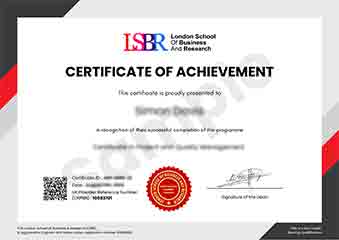
Sample Certificate
Preview the certificate you'll receive upon successful completion of this program.
Get Free Course Info
Enter your details and we'll send you a comprehensive course information pack straight to your inbox.
Employer Sponsored Training
Let your employer invest in your professional development. Request a corporate invoice and get your training funded.
Request Corporate InvoiceWhat People Say About Us
Hear from our students about their experience with the Executive Development Programme in Optimizing Molecular Interactions Through Electrostatics at LSBRX - Executive Education.
Oliver Davies
United Kingdom"The course content was incredibly detailed and well-researched, providing a deep understanding of how to optimize molecular interactions through electrostatics. I gained valuable practical skills that I can directly apply to my work, enhancing my ability to solve complex problems in my field."
Kavya Reddy
India"This course has significantly enhanced my ability to apply electrostatic principles in molecular interactions, making my work in drug discovery more effective and innovative. It has not only deepened my technical skills but also opened up new career opportunities in competitive pharmaceutical companies."
Rahul Singh
India"The course structure was meticulously organized, providing a clear path from foundational concepts to advanced applications in molecular interactions. The comprehensive content not only deepened my understanding but also offered valuable insights into real-world scenarios, enhancing my professional growth significantly."